
Harrison Village Facts
Executive Summary
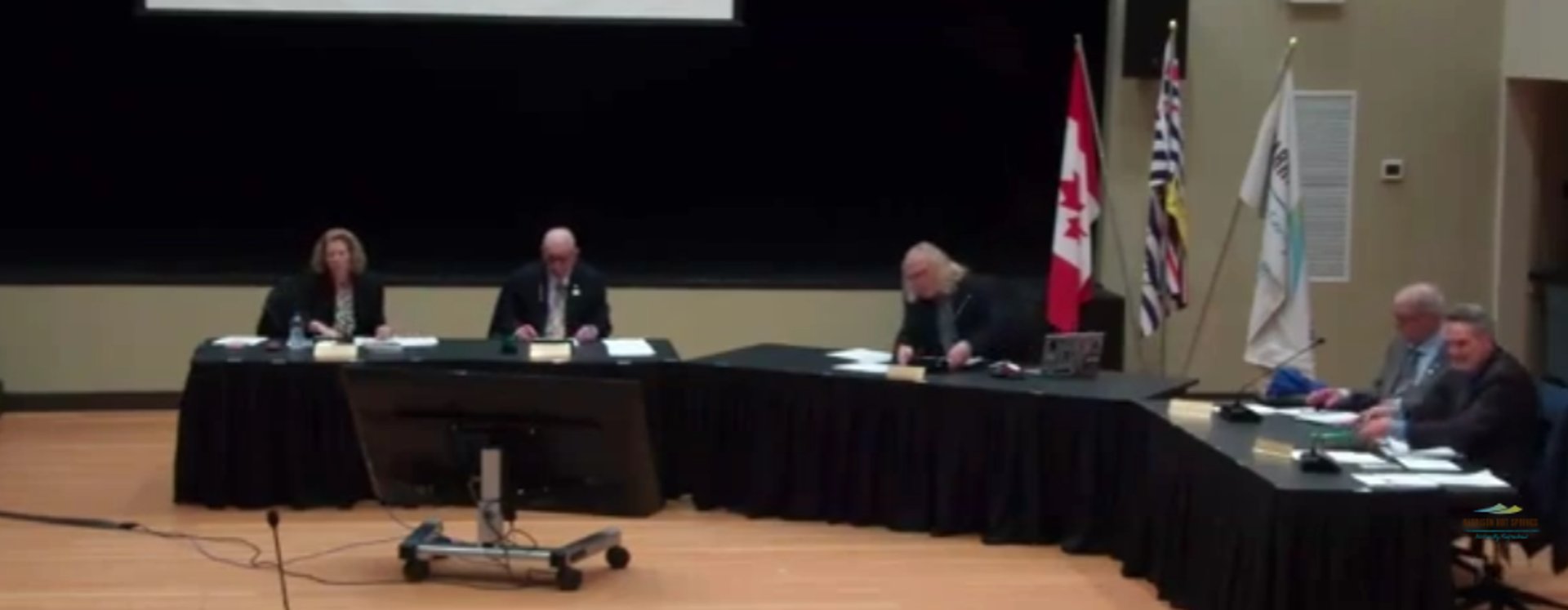
Following a recent Council decision to not support further engagement on flood and wildfire risk, questions were submitted to Mayor and Council.
A staff response was provided outlining existing plans and coordination efforts. The response confirms known risks, including single route evacuation and extended timelines, but does not explain Council’s decision.
The full email string to date, the response is included below, followed by key observations.
April 21st 2026
Mayor and Council,
Following the recent council decision to reject a motion related to flood and wildfire risk engagement by Councillor Mark Schweinbenz , I am requesting clear answers to the following:
Why was it determined that now is not the time to engage external agencies on flood and wildfire risk?
What current emergency, evacuation, and wildfire plans are in place, and when were they last updated?
Do these plans account for the documented 11 to 16 hour evacuation time and single road access?
What specific actions have been taken in the past 12 months to reduce these risks?
What active coordination is currently underway with the Ministry of Forests, BC Timber Sales, and Indigenous land managers?
What known gaps exist in Harrison’s emergency preparedness, and what is the timeline to address them?
Who is responsible for ensuring these risks are actively managed, and how is council informed?
If now is not the time, what conditions would trigger action?
These are reasonable questions tied directly to public safety and documented risk.
I look forward to your response.
Thank you, Gary Webster
The Village answers questions. April 22 2026
Good afternoon Mr. Webster,
Thank you for your email.
While your correspondence is addressed to Council your email relates to a matters that are currently delegated to staff. Responses to your questions are below.
Since, responding to such inquiries is a staff function, not a Council matter, I will not be placing your email on the next regular Council meeting agenda. However, your correspondence is addressed to Council, and accordingly it will be shared with Council. You may appeal the decision not to include your correspondence in the upcoming Council meeting agenda package in writing to Mayor Talen.
1. Why was it determined that now is not the time to engage external agencies on flood and wildfire risk?
I am not aware of a Village policy, motion of Council, or any statement from the Village stating that “now is not the time” to engage external agencies on flood and wildfire risk.
In fact, the reality is that the Village has been, and is, actively involved with other agencies and governments on mitigating the risk from flooding and wildfires. The Village is an active member of the Kent Harrison Joint Emergency Program committee who met last on April 15th, 2026. Members of this committee include, the Village of Harrison Hot Springs, District of Kent, Seabird Island, SD78, the RCMP, EMCR, BCEHS, Tourism, Fraser Health, KHSAR, DoK FD, VHHSFD and MOTT.
As you may know, Council has directed staff to proceed with designing dike upgrades and improvements to mitigate the risk of flooding from Harrison Lake. Updates on this work is expected in the coming weeks.
The Village has also engaged Red Dragon consulting on an Evacuation planning. And when completed it will be shared with the District of Kent, Sts’ailes, Sq’éwqel (Seabird Island Band), RCMP, KHSAR, VHHS FD and working with our neighbours, taking steps to coordinate an emergency response, should it be needed.
In addition, the Village is updating its Resident Resource Guide, with input from other agencies, that provides information for residents on how to prepare for an emergency.
I would also add, that a recent Village ‘Lunch and Learn’ was well attended providing residents with information on fire smart landscaping. And, the Village working with UBCM was successful in obtaining grant funding for additional equipment for the Village’s Fire Department to enhance the ability of the Village’s Fire Department to respond to fires.
As you can see, it is always the time to engage external agencies and take steps to mitigate flood and wildfire risk, and more generally have plans in the event of an emergency.
2. What current emergency, evacuation, and wildfire plans are in place, and when were they last updated?
The Village and District of Kent operate under the Kent Harrison Joint Emergency Program (KHJEP), which covers flooding, wildfire, landslides, and earthquakes with ongoing updates coordinated by the Emergency Program Coordinator.
The Resident Resource Guide, Community Wildfire Resiliency Plan (CWRP), finalized late 2024 and a Formal Evacuation Route and Planning Toolkit, under development with Red Dragon Consulting, are examples of Village plans.
3. Do these plans account for the documented 11–16 hour evacuation time and single road access?
The evacuation planning work presented in January 2026 confirms that:
• Harrison Hot Springs has one primary evacuation route (Highway 9, southbound).
• The 11–16 hour evacuation time represents a strategic, managed evacuation timeline, incorporating detection delays, Emergency Operations Centre (EOC) mobilization, traffic control, and door to door notification. This is not merely the time needed for residents to drive to an emergency centre.
• Population modeling includes residents and seasonal visitor surges, with uncertainty buffers applied.
• The consultants also noted that rapid onset hazards may not allow this timeframe, which remains a recognized constraint.
4. What specific actions have been taken in the past 12 months to reduce these risks?
In addition to the actions noted in the answer to question 1 above:
• Completion and adoption of the Community Wildfire Resiliency Plan, identifying treatment areas, fuel hazards, and inter agency coordination priorities
• Maintaining the SenseNet early wildfire detection sensors and cameras throughout forested areas and critical infrastructure sites
• Advancing evacuation route planning, including public surveys, modeling, and tabletop exercises
• Progress on the Waterfront Dike Upgrade Project
5. What active coordination is currently underway with the Ministry of Forests, BC Timber Sales, and Indigenous land managers?
Coordination includes:
• Alignment of the CWRP with provincial wildfire frameworks, BC Wildfire Service risk data, and Ministry of Forests guidance
• Operational coordination during active wildfire incidents near Harrison Lake with BC Wildfire Service and our indigenous neighbours.
• Joint emergency planning through KHJEP, which includes neighbouring jurisdictions and First Nations for response and evacuation support
• Ongoing communication with BC Timber Sales
6. What known gaps exist in Harrison’s emergency preparedness, and what is the timeline to address them?
Emergency preparedness is not a fixed endpoint but a continually evolving process that must adapt to changing risks, environmental conditions, population fluctuations, and operational experience. As a result, the Village recognizes that preparedness will always involve multiple considerations and areas for improvement rather than a finite list of gaps to be permanently closed. Ongoing work includes regularly reviewing plans, updating assumptions, and adjusting priorities as new information, technologies, and best practices emerge.
To address this, the Village is taking a continuous improvement approach that includes training and exercising staff, strengthening coordination with response partners, and incrementally adding or upgrading mitigation and response equipment as resources and funding allow. Some improvements can be implemented in the short term, such as training or equipment acquisition, while others—particularly those involving infrastructure or external approvals—require longer term planning. Rather than a single timeline, preparedness actions are advanced through rolling work plans, grant opportunities, and council direction to ensure readiness keeps pace with changing risk.
7. Who is responsible for ensuring these risks are actively managed, and how is council informed?
Responsibility is shared across:
• Kent Harrison Joint Emergency Program, led by the Emergency Program Coordinator
• Councillor Vidal provides updates to Council at RCM’s
• Village staff departments (Operations, Community Services, Fire Department) implementing mitigation actions
• Council receives updates through staff reports, annual reports, consultant presentations, and council meeting agendas
8. If now is not the time, what conditions would trigger action?
This question could be interpreted in several ways. If this is in reference to emergency planning and preparations, please refer to the answers to questions 1, 4, 5, 6 and 7.
If this is in reference to when an emergency response is triggered, actions would be triggered when an emergency presents itself.
Tyson Koch AScT, RSIS
Chief Administrative Officer
Village of Harrison Hot Springs
Resort Municipality
My Response April 22 2026
Hello Tyson,
Thank you for the staff response.
However, the central question remains unanswered. This is a Council decision, not an operational matter.
A motion related to further engagement on flood and wildfire risk was brought forward and not supported by Council.
What was the rationale for Council’s decision to reject that motion?
I am requesting a direct response from Mayor and Council.
Thank you, Gary Webster
236-988-6606
We provide clear, factual summaries of council meetings, bylaws, and decisions affecting Harrison Hot Springs.


Our Mission
How We Work
By tracking public records and discussions, we aim to boost transparency and keep residents informed.
Stay Informed
Get clear updates on council decisions
Contact Us
Reach out with questions or corrections about council decisions and local updates.