How Bylaw 1230 Affects Harrison Hot Springs
Bylaw 1230 Has Passed — What Residents Need to Know
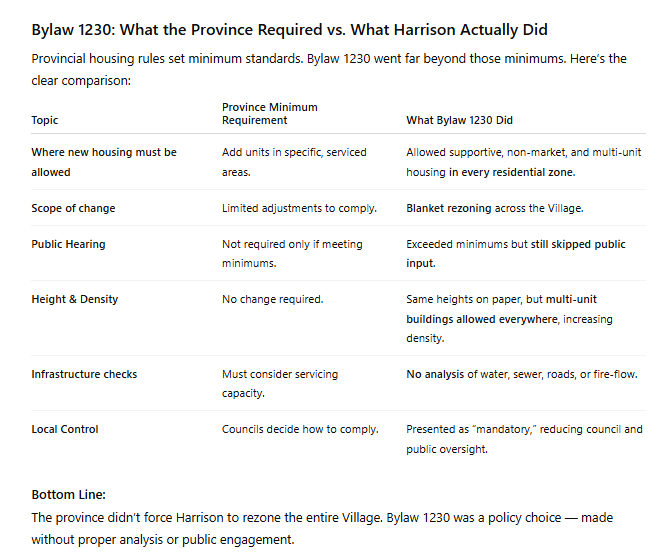
Bylaw 1230 has now been adopted by Council. This bylaw changes what types of housing are permitted in various zones across the Village. It does not approve any specific development, but it changes the rules under which future developments can be proposed.
What Bylaw 1230 Does
Adds new permitted housing uses to existing zones
Expands what can be applied for under current zoning
Creates a legal pathway for housing types that were previously not allowed
Aligns local bylaws with provincial housing policy requirements
What Bylaw 1230 Does Not Do
It does not approve any individual project
It does not select sites or locations for housing
It does not mandate building height, density, or design
It does not override future council decisions
It does not remove the need for site-specific applications
Why This Matters
With Bylaw 1230 in place, the planning discussion shifts. The debate is no longer about whether certain housing uses are allowed in principle — that decision has been made. The focus now moves to how, where, and under what conditions those uses are approved.
Future proposals will still require:
Rezoning or development permit approvals (where applicable)
Consistency with the Official Community Plan
Infrastructure and servicing capacity review
Environmental and hazard considerations
Public transparency and scrutiny
What Residents Should Watch For
Site-specific applications that rely on the new permitted uses
Requests for variances or relaxations tied to Bylaw 1230
How infrastructure limits are addressed before approvals
Whether public input is meaningfully considered at the project stage
Bottom Line
Bylaw 1230 does not force development — but it opens the door.
What happens next depends on council decisions, staff recommendations, and public oversight.
Residents now need to pay close attention to individual applications, because that is where the real impacts will be decided.